
Wild boar in the Forest of Dean: what dog walkers need to know
If you have read anything about the Forest of Dean, you will have read about the boar. They live across the Forest, they have done for years, and most people who walk here regularly will see them sooner or later. We would rather you heard about them from us, before you book, than from a sign in a car park on your first morning.
So here is the honest version, with the advice taken straight from Forestry England, who manage the Forest. It is not alarming once you know what you are dealing with. It is mostly about keeping your dog close, which is what the Forest asks of you anyway.
First, the thing nobody likes saying
Forestry England's own page says it plainly: dogs have, on occasion, been injured or killed by wild boar in the Forest of Dean. It also says such attacks are rare. Both halves of that sentence are true, and both matter. The risk is real enough to take seriously and small enough that thousands of dogs are walked here happily every week. The way you keep yours in the second group is the same way you keep it safe around livestock, deer or a busy trail: close control, within sight, and on a lead when in doubt.
How boar behave
Boar have poor eyesight, but a strong sense of smell and very good hearing. When they sense something moving towards them, they will often move towards the sound to work out what it is. To a walker, that can look like a charge. Usually it is curiosity.
The exception is a sow with piglets. Sows can give birth at any time of year, with a peak in spring and early summer, and litters in the Forest typically run to six to ten. Around the birth, a family group may stay in one spot for a week or more. If you disturb a group, the sow will often put herself between you and the young, with a lot of snorting, while the others lead the piglets away. If you keep walking towards her, she may make a mock charge. Older males tend to be solitary and are more likely to stand their ground than move off.
Piglets are a lighter ginger-brown with stripes, which is camouflage. If you see a striped piglet, assume the mother is close.
What Forestry England asks of dog walkers
Keep your dog under close control and within sight, and ideally on a lead. This matters most if your dog does not always come back when called in woodland, where there is a great deal to be distracted by.
If boar appear:
- Call your dog to heel and put it on the lead.
- Give the animals space.
- Turn and find a different path, or stand still until the boar have moved off.
- Do not keep approaching a sow with young.
That is the whole of it. None of it requires anything of you that a good walk in the countryside does not already ask.
Please do not feed them
Boar do not need feeding. The Forest gives them everything they eat. Feeding them risks spreading African swine fever, which is fatal to pigs and boar but does not affect people, so Forestry England asks everyone never to feed boar or pigs and to put food waste in a secure bin. The same goes for picnic leftovers on the ground.
If something goes wrong
If you find an injured or dead boar, Forestry England asks you to call 0300 067 4800 between 9am and 3pm, Monday to Friday, or email westengland@forestryengland.uk. Outside those hours, the police on 101 can arrange a humane dispatcher. If your own dog is hurt, your first call is a vet; we will give you the nearest one when you book.
How this fits a stay with us
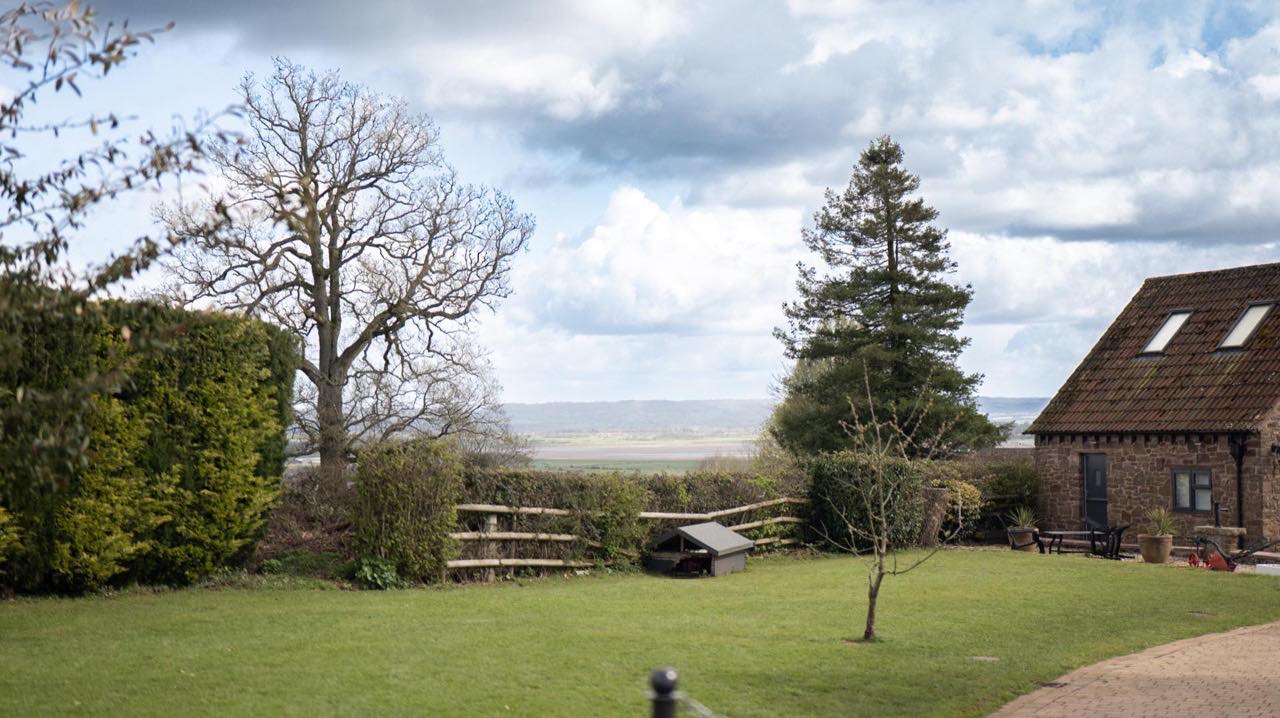
We are on the southern edge of the Forest at Aylburton, and our walks from the door are the lane down to the village pub and the roads around it. The Forest's woodland walks are a fifteen to twenty minute drive. When you are in the Forest, treat it as lead-on-until-you-know ground, and keep your dog where you can see it.
Then come home. Each of our two stables has its own enclosed grass paddock, private to your booking, behind the automated gates at the road and the field gate inside them. That is where the off-lead running happens, with no boar, no deer, no road and no other dogs. The Forest is for the walk. The paddock is for the tearing about afterwards.
And if the walk was a muddy one, the wash station with its blow drier is free, and you can use it as often as you like.